- Aug 25
When the Prepared Environment Must Change: Rethinking Access, Observation, and Independence in Montessori Education
- Maria Chaffin
One of the principles that initially drew me to Montessori education, and that continues to influence my work, is the role of observation. We are taught to observe carefully, to understand development before intervening, and to prepare an environment that responds to what we learn through that process. The environment is not separate from the learner; it is part of the educational experience and should evolve according to developmental needs. As Montessori educators continue to serve increasingly diverse communities, however, I believe we need to examine whether our current understanding of the prepared environment has evolved sufficiently to support neurodivergent learners.
This question has become increasingly important in my work with Montessori schools. I continue to encounter situations in which an individualized support is questioned, not because there is evidence that it is ineffective, but because it does not fit an established perception of what a Montessori classroom should look like. Recently, while working with a school, I suggested that a student might benefit from a visual schedule. The response was immediate. A visual schedule, I was told, such things did not belong in a Montessori classroom. The concern was not initially whether the support would increase autonomy, reduce uncertainty, or decrease the need for repeated adult prompting. The concern was that the support itself was not Montessori.
This was not an isolated conversation. I have encountered similar concerns around headphones, alternative seating, movement supports, visual cues, modifications to written work, and other individualized adaptations. These experiences have led me to consider a more difficult question about inclusion within Montessori education: Are we protecting the principles of Montessori, or are we sometimes protecting what we believe Montessori is supposed to look like?
There is an important distinction between the two. Montessori principles related to observation, independence, concentration, purposeful activity, freedom within limits, and the preparation of the environment are not dependent upon every learner accessing the classroom in precisely the same manner. If anything, observation requires the opposite. It asks educators to pay close attention to the interaction between the individual and the environment and to consider what that interaction reveals. When we observe that noise consistently interferes with concentration, transitions create significant uncertainty, verbal directions are difficult to retain, or the visual organization of written work becomes a barrier to demonstrating mathematical understanding, those observations provide meaningful information. They should invite further inquiry rather than an immediate conclusion that the learner must adapt more successfully to an environment that has already been prepared.
Research within Montessori education has identified this tension for some time. Danner and Fowler (2015) found that Montessori and non-Montessori early childhood educators expressed similarly positive attitudes toward inclusion, yet Montessori educators reported less knowledge of inclusion and less professional development in special education than their non-Montessori counterparts. More recently, Long et al. (2022) examined the inclusion of children with disabilities in Montessori programs across the United States. Although school directors generally perceived their educators as confident and competent in supporting these learners, they also identified a continued need for professional development and access to special education expertise. Taken together, these findings suggest that philosophical support for inclusion does not necessarily ensure that educators have received the preparation required to translate that commitment into practice.
This distinction becomes particularly relevant when considering current research on teacher preparation for autism. Lory et al. (2026) examined teacher’s perceived strengths, difficulties, facilitators, and barriers when supporting autistic students. Participants most frequently identified academic instruction as an area of strength, while behavioral needs were described as considerably more challenging. Inadequate training, insufficient staff support, and limited administrative support emerged as important barriers, while collaboration with families and colleagues, access to support personnel, and teacher confidence were identified as facilitators. Although this study was not conducted specifically within Montessori settings, the findings raise an important consideration for Montessori schools. When an educator resists an adaptation because it appears inconsistent with Montessori practice, it is worth examining whether the concern is entirely philosophical or whether limited preparation in neurodivergence, sensory processing, executive functioning, communication, or regulation may also influence how the situation is being interpreted.
This is not an argument for disregarding Montessori philosophy in favor of every contemporary educational intervention. Nor should accommodations be introduced simply because they are commonly recommended for a particular diagnosis. An autistic student does not automatically require a visual schedule, just as a student with ADHD does not automatically require alternative seating or a movement plan. Such assumptions would contradict the individualized observation that Montessori education values. The purpose of an adaptation should be connected to an identified barrier, and its effectiveness should continue to be examined after it is introduced. The important question is not whether a classroom contains a particular support, but whether that support changes the learner’s ability to participate, concentrate, communicate, organize, regulate, or function with greater autonomy.
Regulation, Predictability, and Meaningful Access
Recent research that includes the perspectives of neurodivergent students provides an important dimension to this conversation. Kakoulidou et al. (2026) explored school experiences through focus groups with autistic and ADHD students between the ages of 11 and 16 and with school staff. Their findings identified an overwhelming and uncertain physical environment, lack of belonging and understanding, inflexible school policies, and academic pressure as sources of emotional burden. Of particular importance, students and staff frequently shared an understanding of the difficulties present within the school environment, although they experienced those difficulties from different positions. Staff observed behavior, while students described the internal experience associated with those environments. Both groups identified environmental adaptations as important practices for reducing emotional burden, alongside agency, trusting relationships, understanding, collaboration, and staff training.
The distinction between what an adult observes and what a student experiences internally is significant. In education, we often make judgments about whether an environment is working based upon visible participation. A learner may be physically present, complete assigned work, move through the daily schedule, and meet behavioral expectations while using a considerable amount of cognitive and emotional energy to manage the environment. Observable compliance does not necessarily indicate meaningful access. Similarly, the need for an external support does not necessarily indicate a lack of independence. Without understanding the internal experience, educators may unintentionally interpret successful coping as evidence that no adaptation is necessary.
This is particularly relevant when regulation is conceptualized primarily as an individual responsibility. Neurodivergent learners are frequently taught strategies to manage frustration, sensory input, attention, transitions, and emotional responses. These approaches can be valuable; however, they become incomplete when the surrounding environment remains outside the analysis. Kakoulidou et al. (2026) demonstrated that the school environment itself can contribute to emotional burden through uncertainty, sensory demands, inflexible policies, inconsistent adult understanding, and pressure around academic performance. If the setting is contributing to dysregulation, the responsibility cannot rest exclusively with the learner to develop greater tolerance for that environment.
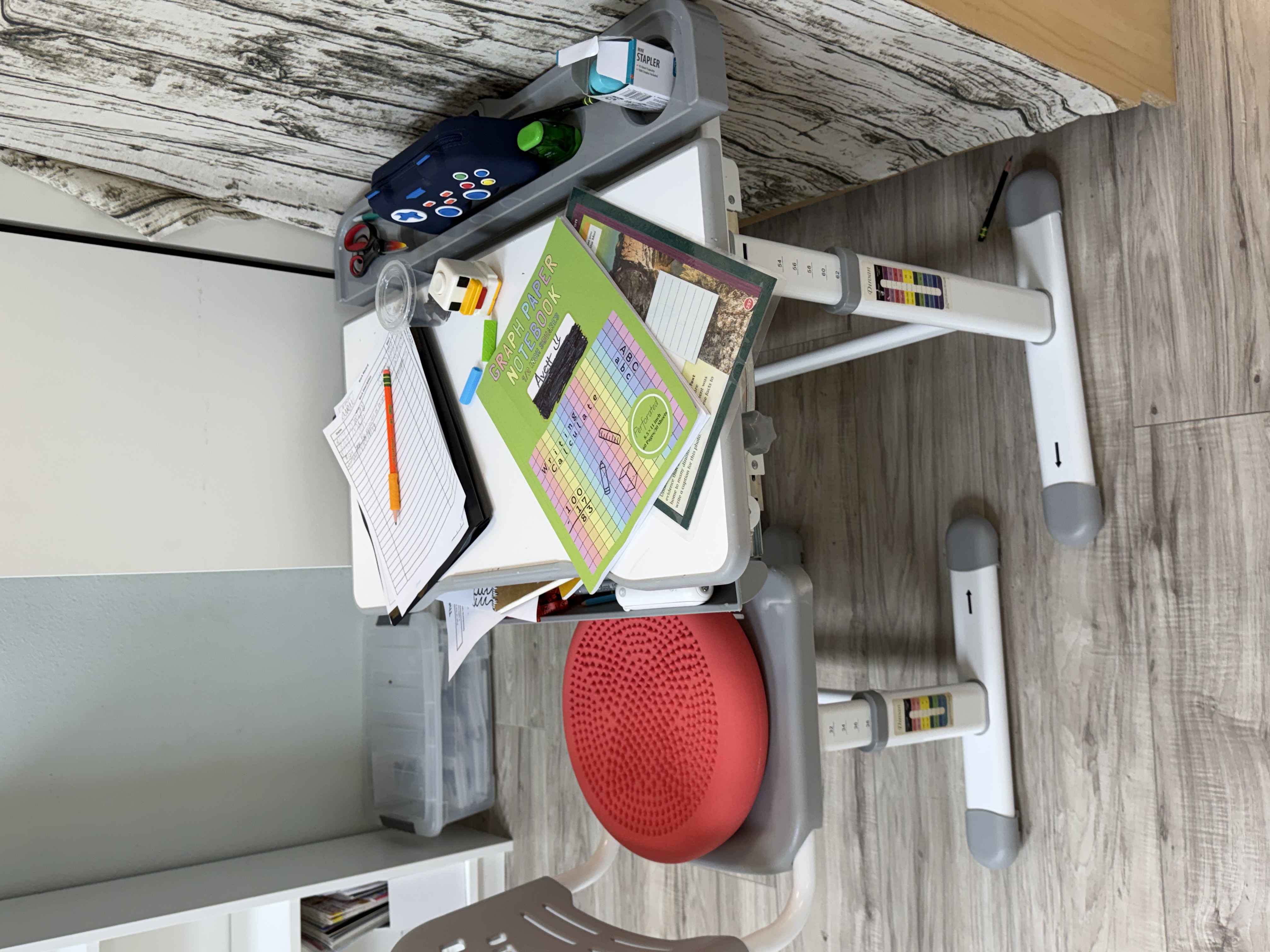
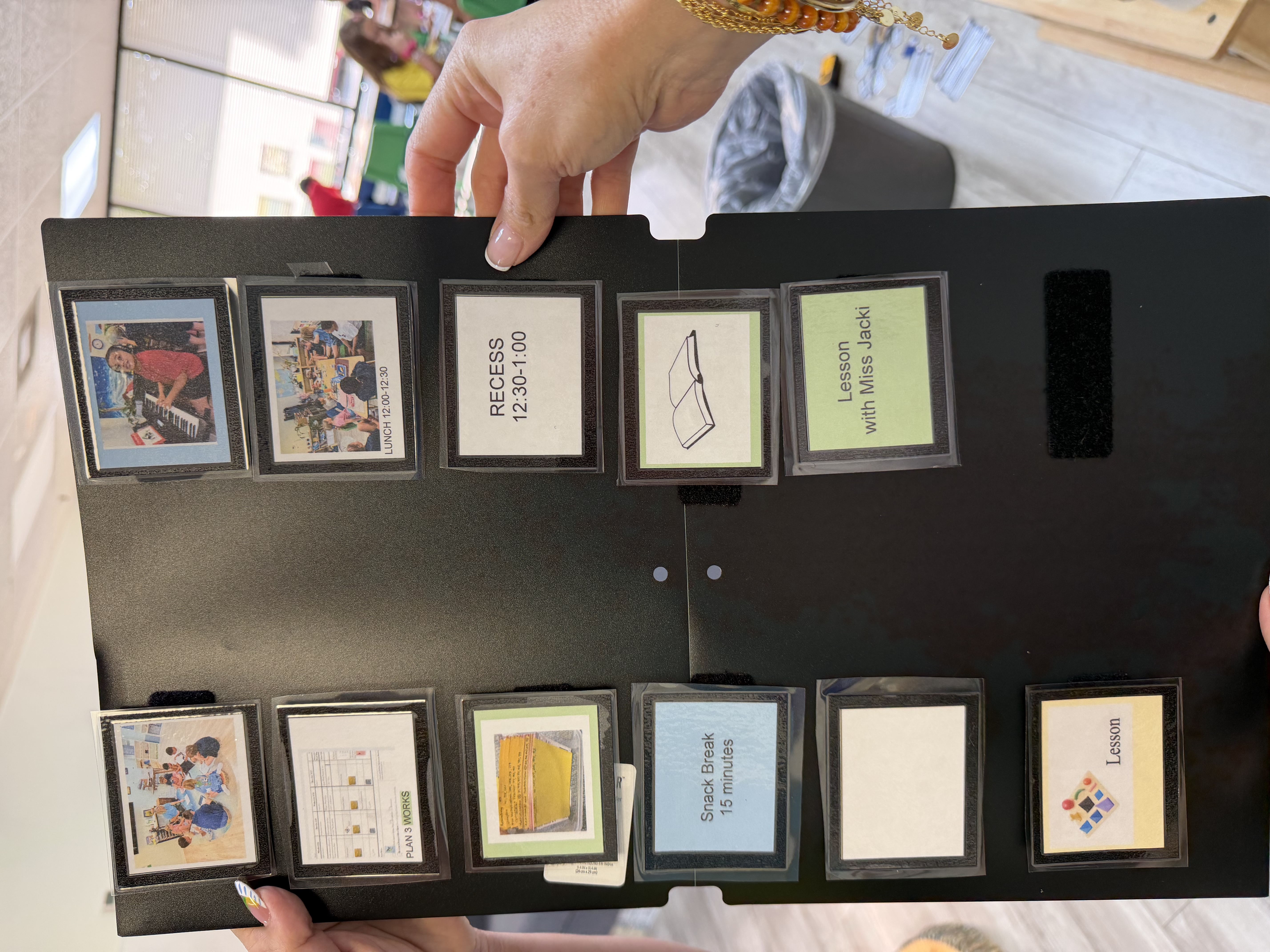
Within Montessori education, this creates an opportunity to return to the prepared environment with a broader understanding of its function. A pair of headphones may reduce sensory demands enough for sustained concentration. A visual schedule can provide information about time and transitions without requiring repeated verbal direction from an adult. Color-coded mathematical paper can provide external organization when executive functioning demands interfere with the ability to represent mathematical knowledge. These adaptations do not necessarily change the academic expectation or remove meaningful challenge. Instead, they may reduce demands that are unrelated to the learning objective and allow the individual to direct cognitive resources toward the work itself.
I have come to understand this relationship through four interconnected concepts: regulation, predictability, access, and independence. I do not view these as a fixed sequence or as a formula that can be applied identically across learners. Rather, they provide a framework for examining the relationship between the individual and the educational setting. Regulation affects the capacity to engage with people, materials, and expectations. Predictability can decrease unnecessary cognitive and emotional demands and provide a greater sense of control. When these conditions are present, meaningful access may increase, creating greater opportunities for participation and, ultimately, autonomy.
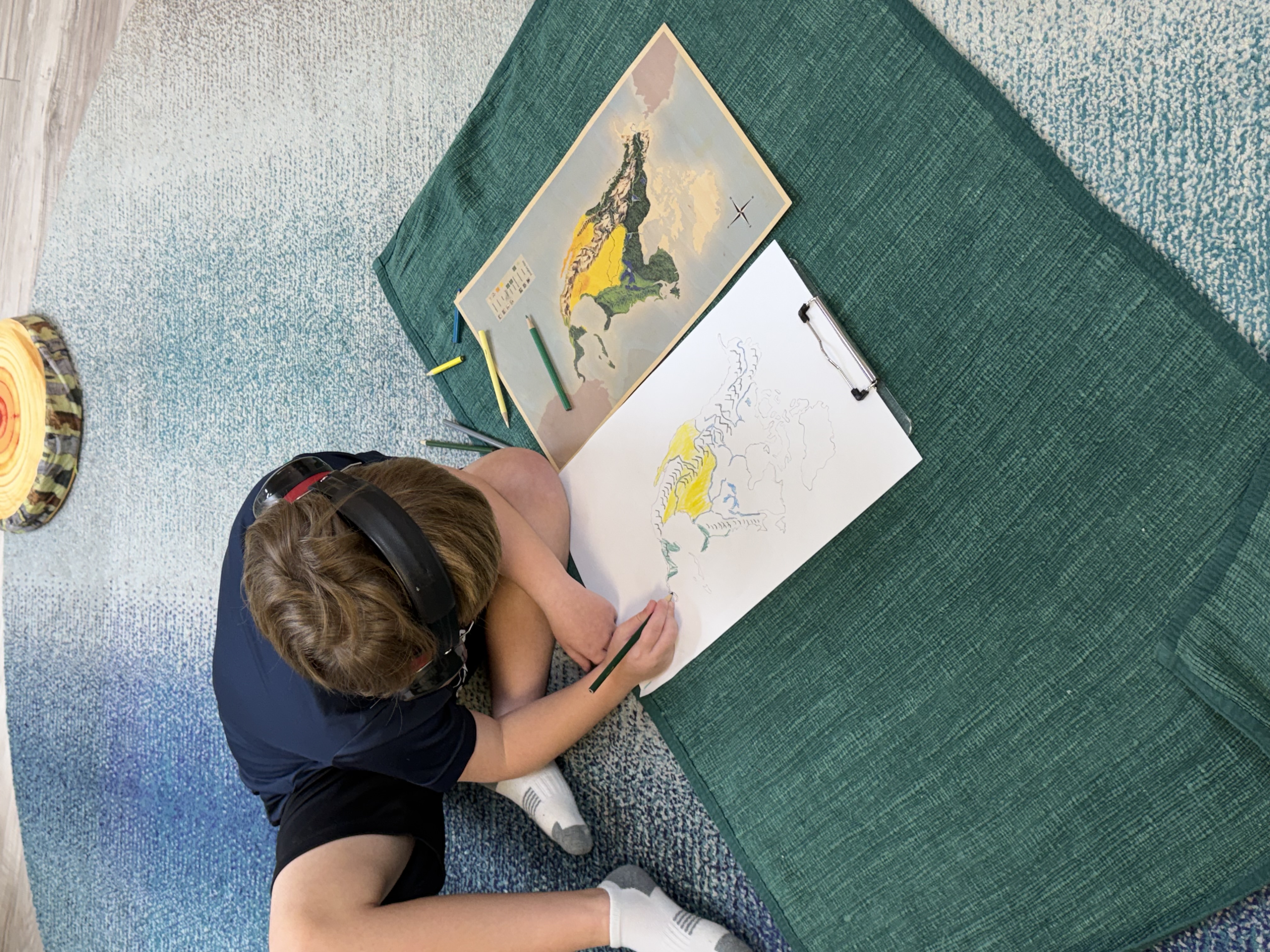
The connection between external support and independence deserves particular attention because Montessori education places significant value on the development of autonomy. Independence, however, should not be defined simply as completing an activity without assistance. A learner who repeatedly asks an adult what comes next may appear to be functioning within an unmodified environment, yet remains dependent upon another person for information. When the sequence of the day is made visible and can be accessed without adult assistance, information has effectively been transferred from the adult to the environment. From this perspective, a visual schedule does not necessarily create dependence. It may decrease it.
The same principle can be considered across other adaptations. When a learner independently recognizes that the sensory environment has become overwhelming and chooses to use headphones, the adult may no longer need to recognize the signs of dysregulation and intervene. When visual organization allows written work to be completed without continuous prompting, adult involvement decreases. When environmental cues provide enough predictability to navigate a transition successfully, the individual gains greater control over the experience. In each of these situations, the external support becomes a bridge toward autonomy rather than evidence that autonomy has failed.
Observation Must Be Willing to Change Our Practice
Observation is often described as one of the defining practices of Montessori education, yet its value depends upon what educators are willing to do with the information it provides. Scippo (2025) offers a useful example through a single-subject case study examining the engagement of an autistic five-year-old with Montessori sensorial materials. The study incorporated ethnographic and structured observation to examine behaviors related to attention, motor coordination, engagement, communication, and independent completion of activities. What is relevant to the present discussion is not an argument that Montessori materials are inherently effective for autistic learners. Rather, the study illustrates the importance of examining the interaction between a specific learner, particular materials, and the conditions under which engagement occurs.
This distinction is essential. Montessori materials, classroom structures, and established practices should not be considered effective merely because they are Montessori. They remain part of an environment that must be observed in relation to the individuals using them. Similarly, an adaptation should not be considered inappropriate simply because it originates outside traditional Montessori practice. Both require observation, intentionality, and continued evaluation.
Danner’s (2015) examination of early childhood inclusion in a public Montessori school provides further context. The study identified Montessori-specific practices, including multi-age classrooms and peer support, as contributing to inclusion, while also identifying practices commonly associated with early childhood special education, such as professional collaboration, accommodations, and modifications. This is significant because it challenges the assumption that Montessori practice and individualized adaptation must exist in opposition. An inclusive environment may draw upon the strengths already embedded within Montessori while incorporating additional supports when observation indicates that they are necessary.
The more difficult issue, therefore, may not be whether Montessori can accommodate neurodivergent learners, but whether educators and school leaders are prepared to reconsider familiar practices when those practices create barriers. This requires a form of professional reflection that extends beyond knowledge of strategies. It requires educators to recognize that behavior does not occur independently of context and that the environment, adult expectations, communication demands, sensory experiences, and classroom structures all contribute to what is observed.
If observation begins with the predetermined conclusion that a visual support, sensory tool, or modification is incompatible with Montessori, the process has already been compromised. We may still be watching, but we are no longer allowing observation to inform our understanding. Instead, we are interpreting what we see through a conclusion that has already been established.
For me, this is where the role of the prepared adult becomes inseparable from the prepared environment. The adult must be willing to remain curious when expectations and observed behavior do not align, to examine whether an environmental demand is necessary to the developmental or academic objective, and to reconsider a practice when it is creating an unintended barrier. This does not mean lowering expectations. In many cases, the opposite is true. Removing an unnecessary sensory, organizational, communication, or executive functioning demand may allow educators to maintain meaningful academic and developmental expectations while providing a more equitable pathway for meeting them.
Inclusion as a Leadership Responsibility
These considerations cannot remain solely within the responsibility of the classroom guide. The findings of Danner and Fowler (2015), Long et al. (2022), Lory et al. (2026), and Kakoulidou et al. (2026) collectively point toward a broader issue of professional preparation and organizational support. Educators may value inclusion while still lacking specific knowledge, access to specialists, opportunities for collaboration, or administrative structures that allow individualized support to be implemented consistently. For this reason, the capacity of a Montessori school to include neurodivergent learners cannot be evaluated only by examining the practices of individual educators. Leadership, professional development, collaboration, school policies, and the willingness of the organization to respond to learner variability are also part of the prepared environment.
This is an area where Montessori leaders have a particular responsibility. If an educator has not received sufficient preparation to understand sensory processing, executive functioning, autism, ADHD, communication differences, or nervous system regulation, it is unreasonable to expect philosophical commitment alone to produce effective inclusive practice. Similarly, if teachers are expected to individualize instruction but do not have access to collaboration, professional development, specialists, or leadership support, the responsibility for inclusion has been placed at the classroom level without establishing the conditions necessary for it to succeed. Lory et al. (2026) identified inadequate training and insufficient staff and administrative support as barriers to teachers’ work with autistic students, while Long et al. (2022) found that Montessori school directors continued to identify professional development and special education expertise as areas of need. These findings suggest that inclusion requires organizational capacity, not simply individual goodwill.
Leadership must also create space for professional questioning. “That is not Montessori” cannot function as the end of a conversation about access. It can be the beginning of one. Educators should be able to ask whether a proposed support is developmentally appropriate, whether it maintains meaningful expectations, whether it promotes greater autonomy, and whether it is consistent with the broader principles of Montessori education. Those are legitimate professional questions. Rejecting an adaptation primarily because it changes the recognizable appearance of the classroom is a different matter.
The distinction becomes especially important as Montessori schools serve learners whose needs may not have been fully understood when many traditional classroom practices were developed. Contemporary knowledge regarding autism, ADHD, sensory processing, executive functioning, communication, and neurodiversity provides educators with information that was not available in the same form during Montessori’s lifetime. Respect for Montessori philosophy does not require educators to disregard subsequent developments in the understanding of human development. Instead, it requires careful consideration of how those developments can inform practice without losing the principles that give Montessori education its identity.
The Prepared Environment as a Responsive Environment
The photographs that led me to reflect on this issue are not extraordinary. One shows a workspace containing headphones and mathematical paper with additional visual organization. Another shows a visual schedule. In another, a learner wearing headphones is engaged with geography work on the floor. What interests me about these images is not the presence of the adaptations themselves, but what they represent about the environment. The expectations for meaningful work remain. Montessori materials remain present. Concentration, choice, engagement, and independence remain visible. What has changed is the pathway through which the learner is able to access them.
This is the point at which I believe Montessori education must continue to grow. Inclusion should not require us to abandon the prepared environment; it should require us to understand preparation more deeply. An environment cannot be considered fully prepared simply because the shelves are organized, the materials are complete, and the work cycle has been protected. Preparation also involves examining whether the sensory, cognitive, social, emotional, and organizational demands of that setting allow the individuals within it to participate meaningfully.
The prepared environment, therefore, should not be understood as a finished product. It is responsive to information. Educators prepare based upon what they know, observe the interaction between the learner and the environment, and make informed adjustments when necessary. Those adjustments are then observed again to determine whether they increase participation, concentration, regulation, or autonomy. This process is not separate from Montessori practice. It reflects the very reason observation holds such an important place within it.
There is also a necessary caution within this approach. Inclusion cannot become a collection of accommodations implemented without consideration of their purpose. More support is not inherently better support. An adaptation that unnecessarily increases adult involvement, reduces meaningful challenge, or remains in place without continued observation can become a barrier of its own. The goal is not to modify every difficulty out of the environment. The goal is to distinguish between productive challenge and unnecessary barriers and to understand what each individual requires to participate with dignity and increasing independence.
As I continue to work with Montessori educators and school leaders, I find myself returning to the same concern. We cannot say that we follow the learner and simultaneously refuse to reconsider the environment when the learner shows us that something is not accessible. We cannot value observation only when what we observe confirms the practices already in place. Observation requires the possibility that what we learn will change what we do.
The conversation about neurodiversity in Montessori education is therefore larger than the question of whether headphones, a visual schedule, alternative paper, or another support belongs in the classroom. It asks us to consider what we mean by access, how we define independence, how prepared our educators are to understand learner variability, and how willing our institutions are to evolve while remaining grounded in Montessori principles.
Perhaps the question should no longer be whether an adaptation looks Montessori. The more important question is whether the environment, with that adaptation in place, allows the learner to engage more meaningfully, depend less upon the adult, and move toward greater autonomy.
If it does, then changing the environment may not represent a departure from Montessori practice. It may represent a deeper application of it.
References
Danner, N. (2015). Early childhood inclusion in a public Montessori school: Access, participation, and supports [Doctoral dissertation, University of Illinois at Urbana-Champaign]. Illinois Digital Environment for Access to Learning and Scholarship. http://hdl.handle.net/2142/78319
Danner, N., & Fowler, S. A. (2015). Montessori and non-Montessori early childhood teachers’ attitudes toward inclusion and access. Journal of Montessori Research, 1(1), 28–41. https://doi.org/10.17161/jomr.v1i1.4944
Kakoulidou, M., Pavlopoulou, G., Low, L., Chandler, S., Baker, S., Johnson, A., Lukito, S., Hurry, J., & Sonuga-Barke, E. J. S. (2026). Reducing emotional burden carried by neurodivergent students in school: Perspectives from students and school staff. Journal of Autism and Developmental Disorders. Advance online publication. https://doi.org/10.1007/s10803-026-07470-6
Long, T., Westerman, C., & Ferranti, N. (2022). Children with disabilities attending Montessori programs in the United States. Journal of Montessori Research, 8(2), 16–32. https://doi.org/10.17161/jomr.v8i2.18639
Lory, C., Lei, Q., Gregori, E., Hammond, T., Lee, R., & Huff, S. (2026). Teaching students with autism: Teachers’ strengths, difficulties, facilitators, and barriers. Research in Autism, 136, 202962. https://doi.org/10.1016/j.reia.2026.202962
Scippo, S. (2025). Developing visuospatial and motor skills in a child with autism: A single-subject case study based on the Montessori approach. British Journal of Special Education. Advance online publication. https://doi.org/10.1111/1467-8578.70074